
When you stand at the crossroads of a major engineering project—especially one involving long-distance fluid transport or complex high-pressure environments—the choice you make is more than just a technical trade-off; it is a critical factor in the project’s success or failure. In the world of Reinforced Thermoplastic Pipe (RTP), the most common debate you will encounter is: Glass Fiber or Aramid Fiber? According to industry data, over 60% of RTP failures are linked not to the pipe itself, but to the incorrect selection of the reinforcement layer during the initial design phase.
When you begin evaluating a material, the first thing you notice is its physical properties. Glass fiber and aramid fiber have entirely different “genes” at the molecular level. Glass fiber is produced by extruding molten glass into extremely fine filaments—a technology dating back to the 1930s—and it typically plays the role of a reliable “veteran” in your projects. In contrast, aramid fiber (most famously known by DuPont’s brand name Kevlar®) is a synthetic fiber born in the 1960s, renowned for its incredible strength, high modulus, and superior weight-to-strength ratio.
| Physical Property Comparison | Glass Fiber (E-Glass) | Aramid Fiber (Para-Aramid) |
|---|---|---|
| Density | Higher (approx. 2.5-2.6 g/cm³) | Extremely Low (approx. 1.44 g/cm³) |
| Tensile Strength | 3450 MPa | 2757 MPa |
| Specific Strength (Strength/Weight) | Moderate | Extremely High |
| Stiffness (Modulus) | Lower (approx. 70-80 GPa) | Higher (approx. 120-130 GPa) |
| Brittleness | Very Brittle | Tougher, High Impact Resistance |
If you are managing a weight-sensitive project, such as aerospace components, high-performance sports equipment, or RTP pipes requiring long-distance transport, aramid fiber will undoubtedly catch your eye. The density of aramid is significantly lower than that of glass fiber, allowing it to provide equal or even higher strength at a much lighter weight.
In practical applications, this means if you choose aramid as the reinforcement layer for RTP, you get a pipe that is thinner and easier to coil and install. Research shows that for the same strength requirement, glass fiber composites weigh almost twice as much as aramid or carbon fiber laminates. When you consider transportation costs to remote areas and the heavy machinery required on-site, this lightweight advantage translates directly into logistical savings.
While tensile strength measures the stress a material can withstand before breaking, you must also consider its “stiffness,” or elastic modulus. Based on experimental data, glass fiber exhibits excellent tensile strength at approximately 3450 MPa, while aramid fiber sits around 2757 MPa. Although glass fiber has a slight edge in pure breaking strength, aramid is unbeatable in strength-to-weight ratio, being five times stronger than steel by weight.
More importantly, aramid has a higher elastic modulus, meaning it is less likely to deform under stress. When your structural components need to maintain precise shapes under load, aramid’s stiffness is your safeguard. Glass fiber, however, is more flexible, making it better suited for scenarios where some bending is permitted without permanent damage, such as boat hulls or automotive panels.
As a project manager, you are likely more concerned with how these materials perform in Reinforced Thermoplastic Pipes (RTP). The reinforcement layer acts as the “muscle” of the pipe, bearing the high pressure of the fluid and determining the pipe’s flexibility in complex terrains.
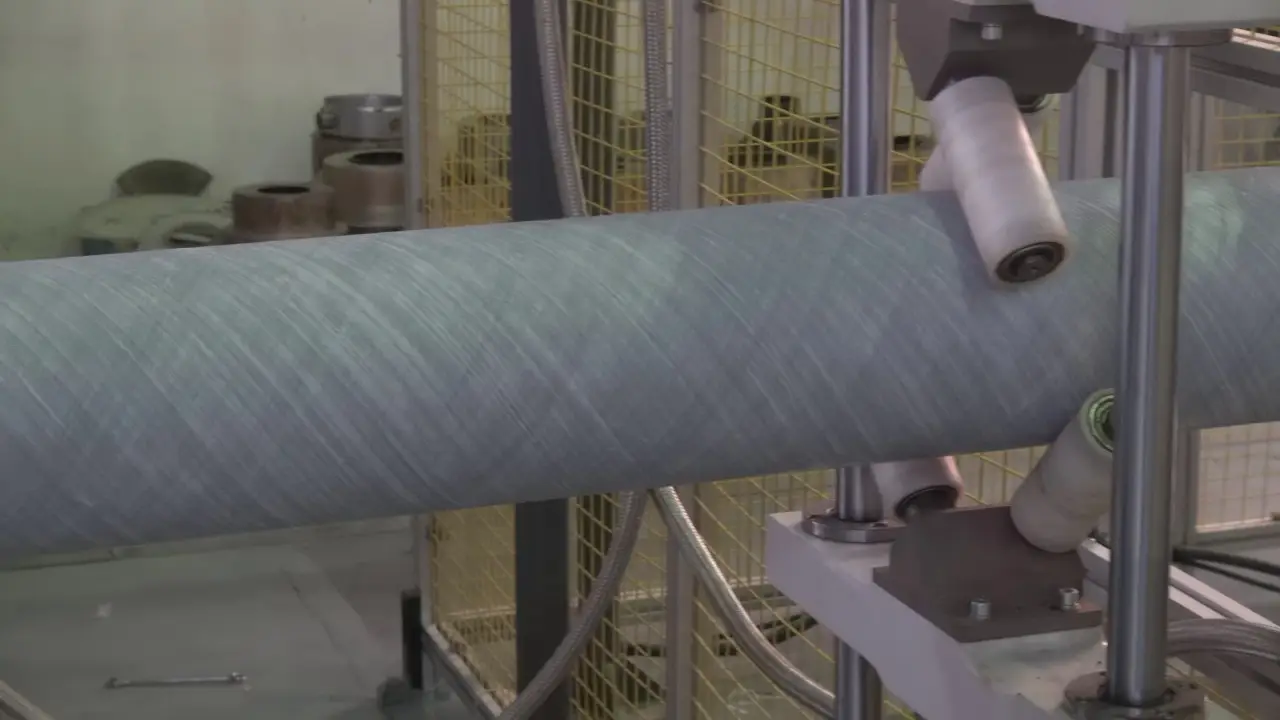
On-site terrains are rarely perfect straight lines. This is where the minimum bending radius becomes a vital parameter. Aramid-reinforced RTP, due to the fiber’s inherent flexibility and strength, generally supports a smaller bending radius. For example, for a 2-inch pipe, aramid RTP can achieve a bending radius of ≤1250 mm, greatly simplifying your installation in rugged environments.
In terms of pressure, both materials perform exceptionally well. Both glass fiber and aramid-reinforced RTP can operate stably in environments with pressures up to 24 (approx. 3500 ). However, aramid’s advantage lies in reaching these ratings with thinner pipe walls. This means you can use smaller reels during installation, reduce the number of joints, and lower the overall risk of system leakage.
Pipes experience pressure fluctuations, temperature changes, and external impacts during operation. If you anticipate frequent pulsating loads, aramid fiber is your best ally. It is the most fatigue-resistant material among mainstream reinforcement fibers. Glass fiber falls in the middle, while carbon fiber is the most sensitive and prone to disastrous, sudden failure.
Additionally, impact resistance is aramid’s trump card. If heavy objects are accidentally dropped on the pipe at a construction site, or if the pipe is used in shallow-buried, rocky environments, aramid’s superior ability to absorb shock energy protects your assets from structural damage. In contrast, glass fiber is brittle; severe impacts can cause micro-cracks that are invisible to the naked eye but can lead to failures during high-pressure operation later.
Your project might be in a scorching desert, a humid coastal area, or inside a chemically corrosive plant. Environmental adaptability directly determines your project’s lifespan.
| Environmental Factors | Glass Fiber Performance | Aramid Fiber Performance |
|---|---|---|
| High-Temp Resistance | Excellent (has melting point, approx. 520°C) | Superior (no melting point, fire resistant) |
| Chemical Corrosion | Good (suitable for most industrial environments) | Excellent (but sensitive to strong acids/bases/chlorine) |
| Moisture Absorption | Extremely Low | Higher (requires waterproof protection) |
| UV Stability | Very Stable | Sensitive (requires UV-resistant jacket) |
| Abrasion Resistance | Moderate | Extremely Strong (difficult to cut) |
In terms of heat resistance, aramid fiber is a “firefighting hero.” It has no melting point and remains structurally intact at several hundred degrees, typically decomposing only above 400°C. This makes it the ideal choice for fire-resistant clothing, industrial furnace insulation, and core aerospace components.
While glass fiber is also highly heat-resistant, it will eventually soften and melt, typically around 520°C (1000°F). While both exceed the requirements for most industrial piping, aramid’s absolute stability provides a higher safety margin in extreme fire protection or high-heat industrial insulation scenarios.
You may be used to using glass-reinforced plastic (FRP) to fight corrosion. Glass fiber is indeed excellent against common acids, alkalis, and salts, making it a staple for chemical storage tanks and general industrial pipes.
However, aramid fiber performs even better against organic solvents and certain potent chemicals. But you must be aware of its key weakness: aramid is sensitive to strong acids, strong bases, and certain oxidants such as common chlorine bleach. If you use chlorine-based disinfectants on-site, ensure they do not come into direct contact with the aramid layer. Furthermore, aramid has some moisture absorption; without a good resin protective layer or external jacket, water can wick along the fibers and weaken the composite.
If you plan to install RTP pipes where they are exposed to sunlight, you must address UV issues. Aramid fibers degrade in sunlight and high-UV environments. This photo-degradation causes the fibers to darken and lose strength. Consequently, all aramid-reinforced pipes are equipped with opaque protective layers. Glass fiber itself is highly insensitive to UV, which is a significant advantage for long-term outdoor installations.
To help you make the final call based on your specific project needs, we have summarized this decision roadmap:

You are handling a large-scale static industrial project (e.g., irrigation, general mine drainage).
Your budget is limited, and the project is not sensitive to weight or frequent coiling.
The pipes are primarily buried in stable environments with low risk of mechanical impact.
You need a chemically resistant solution proven over decades of market use.
The pipe is used in dynamic environments, such as deep-sea offshore operations or emergency fluid delivery systems.
You require high-pressure performance while needing the pipe to be extremely light for rapid deployment or helicopter transport.
Safety is your top priority, requiring superior fire protection, impact resistance, or long fatigue life.
Despite the high initial investment, you can achieve a higher overall ROI by reducing installation machinery costs and extending service life.
In the world of materials science, there is no such thing as the “best” – only the “most suitable”. NQ is dedicated to providing you with high-performance solutions of aramid and glass fibers. No matter which technical path you choose, we will ensure that your project is safe, efficient and economically viable.

Connect with an NQ expert to discuss your product needs and get started on your project.
Contact NowSince aramid is so powerful, why hasn’t it completely replaced glass fiber in industry?
The main barrier is the cost-benefit ratio. Aramid fiber is often 10 times more expensive than glass fiber. For most industrial scenarios where weight isn’t an issue—like underground drainage—glass fiber’s 24 MPa pressure rating is more than enough. Unless the project gains enough from weight reduction or fatigue life to offset the massive price difference, glass fiber remains the rational “value choice.”
If I need extreme “stiffness,” why not use carbon fiber?
This is a common misconception. While carbon fiber is twice as stiff as aramid and five times stiffer than glass fiber, it is extremely brittle. Under impact or frequent bending, carbon fiber can fail “catastrophically”—snapping without warning. Aramid’s strength is its toughness; it is the most resistant to fatigue and impact among all fibers. If you need a material that bends but doesn’t break, aramid is superior to carbon fiber.
I heard aramid is “afraid of water.” Will this affect its use in RTP pipes?
Aramid does have some moisture absorption, and its bond with resin can be weaker than that of glass fiber. If water wicks into the fibers through surface damage, it can weaken the composite. However, professional RTP pipes solve this by completely encasing the aramid layer in a high-density thermoplastic jacket. As long as the jacket isn’t physically breached, the reinforcement layer remains perfectly dry and protected.
What are the absolute “no-go” chemical zones for aramid?
While aramid excels against organic solvents, its fatal weaknesses are strong inorganic acids, strong bases, and chlorine-based oxidants. You must never use common chlorine bleach (like sodium hypochlorite) or hydrogen peroxide directly on aramid, as they quickly degrade the molecular chains. If your environment involves these chemicals, glass fiber or specialized coating protections are safer.
How serious is UV degradation for outdoor pipes?
Aramid is highly sensitive to UV; long-term exposure to sunlight will darken the color and cause significant strength loss. Glass fiber, by contrast, is almost unaffected by UV. Therefore, if choosing aramid RTP, you must ensure the outer jacket has professional UV-resistant additives or bury the pipe underground to eliminate photo-degradation risks.