
In today’s industrial landscape driven by lightweight design, high strength, and superior performance, choosing the right material is no longer just a matter of cost—it is a precise calculation of physical properties, chemical stability, and functional limits. When you step into the world of high-end composites, Carbon Fiber and Aramid Fiber are undoubtedly the two most shining stars. While they often share a similar woven aesthetic and belong to the same family of high-performance synthetics, they possess vastly different “souls” in terms of molecular structure, manufacturing, and behavior in extreme environments.
To understand the performance gap between these two materials, you must first look at their molecular architecture. The unique properties of carbon fiber and aramid fiber are not accidental—they are dictated by their atomic arrangements.
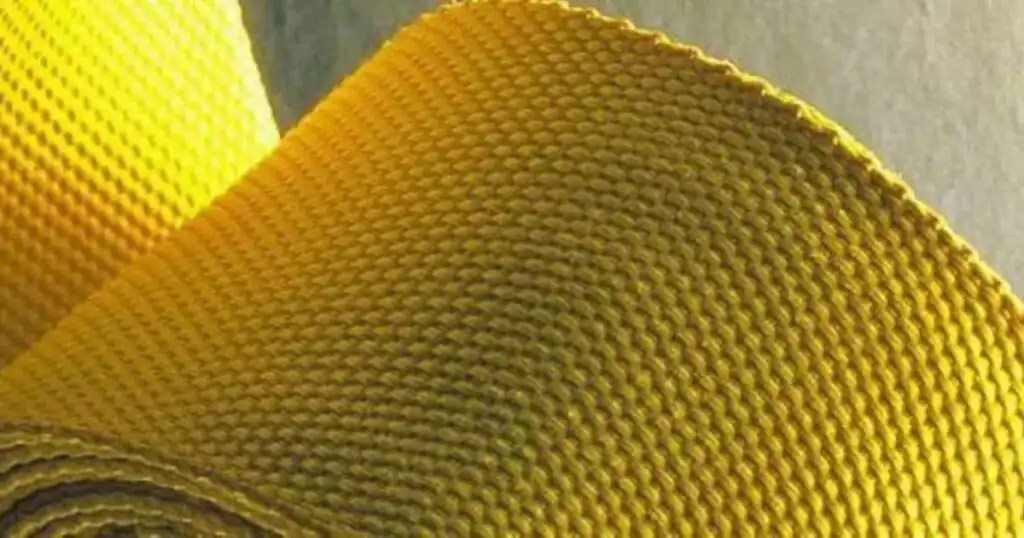
Aramid fiber, short for “aromatic polyamide,” is a man-made polymer. Its molecular structure consists of aromatic rings and amide bonds arranged in long, tight polymer chains. It is these chains, supported by inter-chain hydrogen bonds, that give the material its ability to absorb massive amounts of energy upon impact.
In terms of manufacturing, aramid fiber uses a wet spinning process. The polymer is first dissolved in a solvent and then extruded through a spinneret into a chemical bath where it solidifies into fibers.
As a professional supplier in the field of high-performance composite materials, our company’s aramid fabric strictly follows the high-standard wet spinning process to ensure that each bundle of fibers has excellent molecular alignment consistency. This ultimate pursuit of quality enables our fabric to more efficiently disperse energy through its tight polymer chains when subjected to high-intensity impacts, providing a solid guarantee for various protective applications.
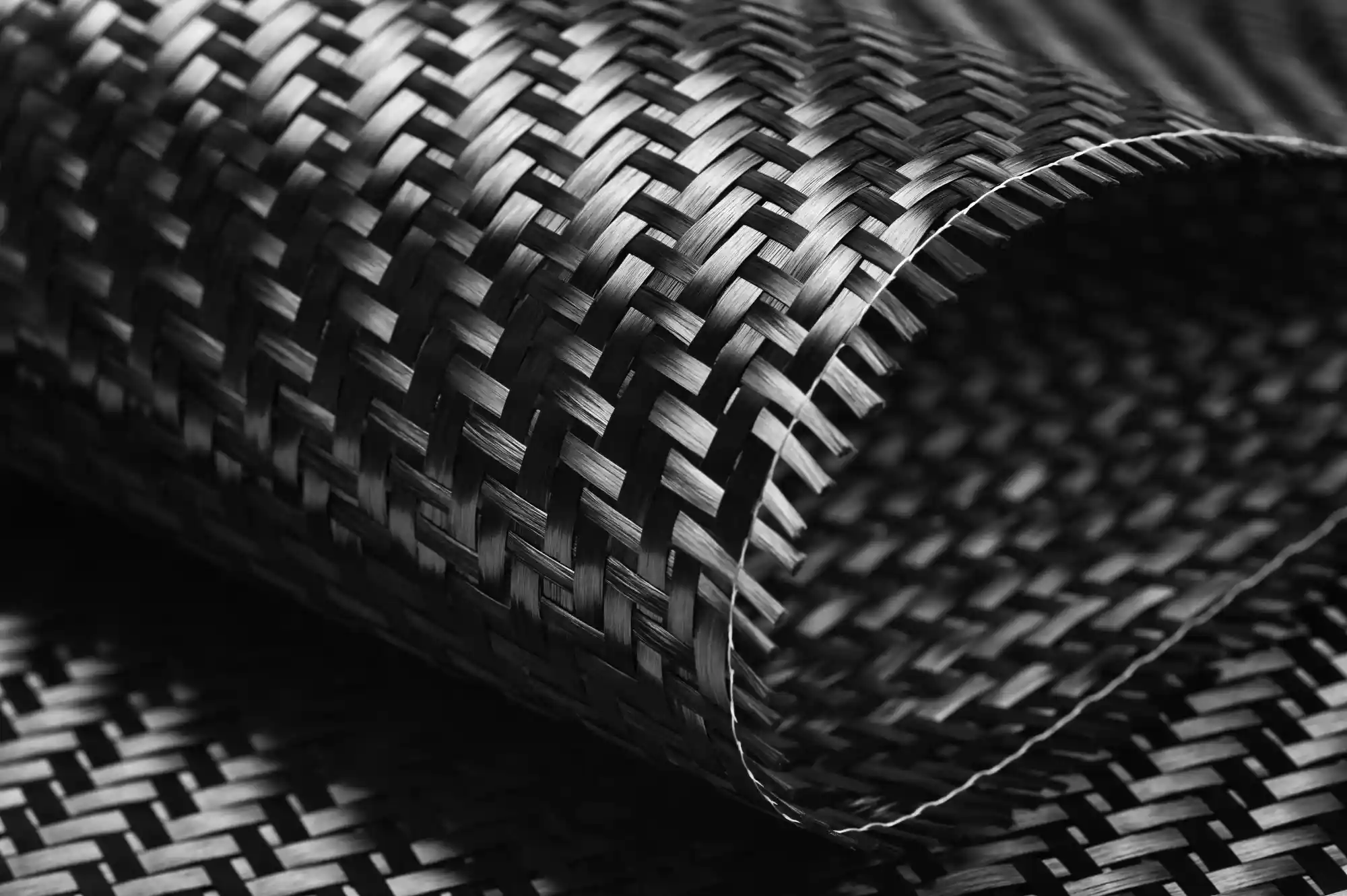
Carbon fiber is essentially a fine filament made of carbon atoms bonded together by extremely strong covalent bonds, typically containing more than 90% pure carbon. From a microscopic view, these carbon atoms are arranged in tiny crystals that are highly oriented along the fiber axis.
The production of carbon fiber is a complex and energy-intensive process achieved through pyrolysis. Manufacturers typically use polyacrylonitrile (PAN), rayon, or pitch as precursors, heating them in an oxygen-free environment to temperatures ranging from 1000-3000°C. This process drives away almost all non-carbon atoms, leaving a graphitic microcrystalline structure.
| Property | Carbon Fiber | Aramid Fiber (Para) |
|---|---|---|
| Main Component | Over 90% pure carbon atoms | Aromatic polyamide polymer |
| Manufacturing | High-temp pyrolysis (1000°C) | Chemical solvent wet spinning |
| Microstructure | Graphite sheets in preferred orientation | Long polymer chains with hydrogen bonds |
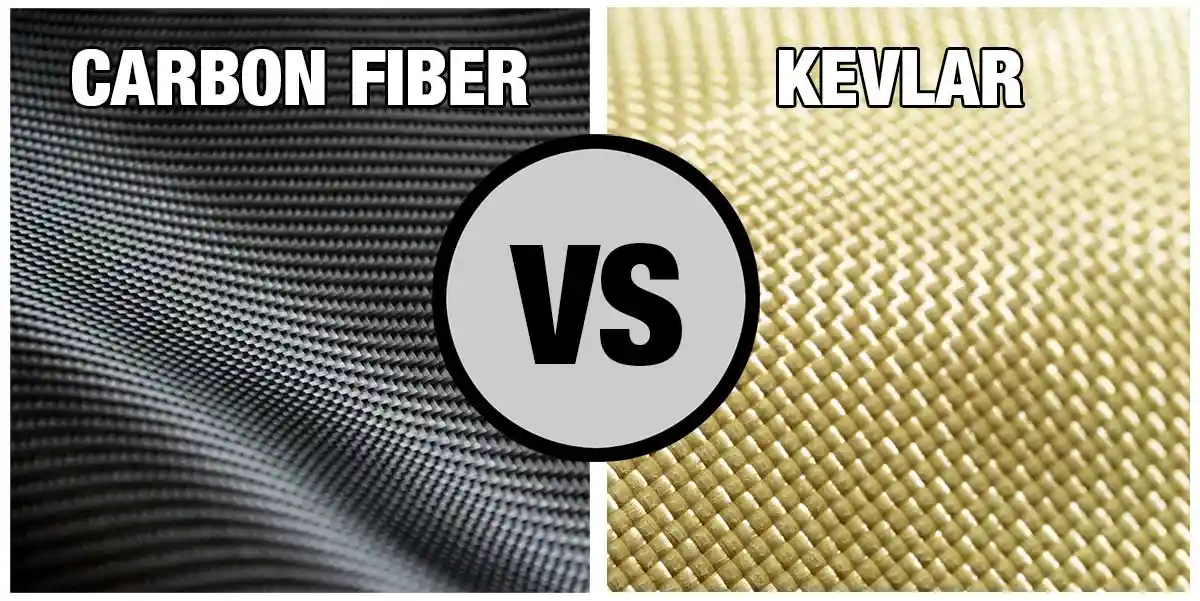
| Appearance | Black, dark gray, silky sheen | Natural golden yellow, matte (dyeable) |
When choosing a material for high-pressure or high-stress applications, mechanical differences will determine success. The core trade-off is: do you need zero deformation (rigidity) or superior energy absorption (toughness)?
Aramid fiber’s tensile strength is slightly lower, usually between 3.6-4.1 GPa. While it lacks the pure stiffness of carbon fiber, it possesses a trait carbon lacks—flexibility and a high strain-to-failure ratio. Aramid tends to deform elastically under pressure rather than snapping, making it more “compliant” under stress.
Carbon fiber holds the absolute advantage in tensile strength. High-performance carbon fiber typically reaches tensile strengths between 3.5-7 GPa. This means it remains incredibly stiff under pull loads and does not permanently deform. Its high elastic modulus ensures it barely bends or stretches, making it the top choice for aerospace wings and racing chassis.
Aramid fiber is the undisputed king of impact resistance and ballistics. Its molecular structure disperses local impact energy rapidly across the fibers and the entire fabric plane. This energy-absorption mechanism makes it irreplaceable in bulletproof vests, helmets, and industrial belts. It can handle sudden stress waves without collapsing—a property known as exceptional “toughness”.
This is the clearest dividing line. While strong, carbon fiber is highly brittle. When subjected to sudden impacts exceeding its load capacity, it tends to shatter or snap catastrophically. This explains why you rarely see pure carbon fiber in protective gear meant to withstand frequent hits.
Carbon fiber’s compression strength is significantly higher than aramid’s. Carbon composites can exceed 1 GPa in compression, whereas aramid fibers are prone to longitudinal buckling, typically ranging from 200-400 MPa. For structural components supporting heavy weights, carbon fiber is superior.
In the actual tests, the aramid fabric we developed demonstrated an astonishing elongation at break and impact toughness. This “flexibility through softness” characteristic makes it an ideal choice for bulletproof vests, industrial conveyor belts, and various impact-resistant reinforcing components. Compared to ordinary industrial-grade fibers, our product not only ensures extremely high tensile strength but also offers better processing flexibility.
| Mechanical Parameter | Carbon Fiber | Aramid Fiber | Performance Meaning |
|---|---|---|---|
| Tensile Strength | 3.5 – 7.0 GPa | 3.6 – 4.1 GPa | Ability to resist being pulled apart |
| Compression Strength | > 1000 MPa | 200 – 400 MPa | Ability to resist being crushed |
| Elastic Modulus | Very High (230 – 600 GPa) | Moderate (70 – 120 GPa) | Rigidity/resistance to bending |
| Impact/Toughness | Moderate / Brittle | Excellent / Elastic | Ability to absorb impact energy |
| Abrasion Resistance | Average (can fray) | Excellent | Resistance to surface wear |
In real-world environments, materials face complex threats. You must understand how these two respond to different external exposures.
Aramid fiber exhibits extraordinary natural flame retardance. Meta-aramids (like Nomex) do not melt, drip, or support combustion when exposed to open flames. They decompose through an endothermic process to form an insulating char layer. This makes aramid the standard for firefighting gear, flight suits, and electrical cable insulation. Aramid can operate long-term at 200-300°C with almost no strength loss.
Carbon fiber’s physical stability at extreme temperatures is impressive. In oxygen-free environments, it can withstand up to 3000°C; even in air, it remains stable below 400°C. However, carbon fiber is not inherently flame-retardant. If exposed to direct flame above 400°C, the carbon atoms react with oxygen to produce CO2 and undergo smoldering.
This is a notable weakness of aramid fiber. It is extremely sensitive to light; long-term UV exposure degrades its molecular chains, turning the color from yellow to brown and causing a sharp drop in mechanical strength. Consequently, outdoor aramid products often require UV-protective coatings. Additionally, aramid is slightly hygroscopic, and moisture absorption can negatively impact its mechanical performance.
Carbon fiber is much more “indifferent” to the environment. It boasts extreme chemical stability against UV rays, acids, alkalis, and organic solvents. As long as the protective epoxy resin matrix does not degrade, carbon fiber can last for decades in harsh outdoor or chemical environments without aging.
Aramid fiber is an excellent electrical insulator. It does not conduct electricity and is almost completely transparent to electromagnetic waves. This property is invaluable in the age of 5G, GPS, and wireless charging, ensuring that signals pass through unobstructed.
Carbon fiber is a conductive material. While this is an advantage in some industrial settings (like EMI shielding or anti-static applications), it is a major disadvantage in electronic device protection. Its conductivity means it absorbs, reflects, and interferes with electromagnetic signals.
In extreme industrial sectors, material choice is a matter of safety and efficiency. Currently, our company’s aramid fabric has been widely applied in key projects such as earthquake reinforcement, underground pipeline repair, and bridge reinforcement. Thanks to its excellent chemical corrosion resistance and ease of construction, our products not only effectively enhance the structural load-bearing capacity, but also prevent the structure from experiencing catastrophic instantaneous collapse under extreme blasting impacts.
In aircraft fuselages, wings, and tails, carbon fiber is the king. The primary reason is its high specific modulus (stiffness-to-weight). In these applications, deformation must be minimized. Carbon fiber withstands massive lift and drag forces without bending, while significantly reducing weight to improve fuel efficiency.
Aramid fiber shines in seismic retrofitting, underground pipe repair, and bridge strengthening. Beyond strength, its superior chemical corrosion resistance and ease of handling are vital. In blast-resistant or cut-resistant scenarios, aramid’s energy absorption prevents sudden, catastrophic structural collapse.
The latest trend is Hybrid Composites. For example, high-end racing helmets often use both.
Carbon Outer Shell: Provides hardness to prevent penetration.
Aramid Inner Layer: Provides toughness during impact, preventing the helmet from shattering and absorbing kinetic energy.
This tech is reaching daily products too. Pitaka’s ChromaCarbon™ technology blends the strength of carbon with the color and feel of aramid for high-performance wearable accessories.
In the duel between aramid and carbon fiber, there is no single winner—only the best choice for your specific needs.
Choose Aramid Fiber if you prioritize safety, impact toughness, and total connectivity (e.g., protective gear, firefighting equipment, and especially smartphone cases), ensuring a seamless 5G and wireless charging experience.
Choose Carbon Fiber if you seek extreme rigidity, lightweight, and a high-tech industrial aesthetic, provided your application doesn’t involve high-frequency signal transmission (e.g., car parts, high-end wallets, model aircraft).

Connect with an NQ expert to discuss your product needs and get started on your project.
Contact NowWhy does carbon fiber affect phone signals while aramid fiber does not?
Carbon fiber is an electrical conductor, which allows it to absorb, reflect, or cancel out electromagnetic waves emitted by your phone, leading to an average signal loss of 40%-60%. In contrast, aramid fiber is a non-metallic, non-conductive insulating material that provides zero interference with 5G, Wi-Fi, GPS, or cellular signals, ensuring you maintain full connectivity.
Do aramid fiber cases support wireless charging and MagSafe?
Yes. Because aramid fiber is non-conductive and non-metallic, it is an ideal material for wireless charging. It does not interfere with magnetic arrays, allowing for precise MagSafe attachment and supporting ultra-fast 15W wireless charging efficiency without signal distortion.
Are “aramid fiber” and “Kevlar” the same thing?
Essentially, yes. Kevlar® is simply the registered brand name for para-aramid fiber manufactured by the DuPont company. When this material is used by other manufacturers for consumer electronics, it is typically referred to by its generic name, aramid fiber, but the physical properties and protective performance are fundamentally the same.
Which is better for drop protection: carbon fiber or aramid fiber?
Aramid fiber is generally superior for drop protection. It possesses excellent toughness and impact-absorption capabilities, meaning it deforms elastically to disperse energy during a fall rather than breaking. Carbon fiber, while extremely rigid and strong, is brittle and more prone to cracking or shattering when subjected to sharp, high-pressure impacts.
How can I tell the difference between real fiber and cheap “carbon pattern” fakes?
You can identify real fiber by checking for three-dimensional weave depth and the “rainbow pop” effect: authentic fiber shimmers and shows iridescent depth when tilted under sunlight, whereas fakes appear flat and printed. Additionally, performing a “tap test” on genuine carbon fiber produces a crisp, high-pitched sound, while plastic imitations produce a dull, heavy “thud”.
What is the heat dissipation performance of an aramid fiber case?
Aramid fiber features excellent heat resistance and, unlike some metals or carbon fiber, it does not conduct heat, which helps keep your phone cooler to the touch during extensive use. Because aramid is an insulator and the cases are typically designed to be ultra-thin and breathable, it provides a superior thermal balance for high-performance devices compared to thicker plastic or conductive carbon cases.