
Most varieties rip by hand, adhere to clean, dry surfaces, and come off with minimal residue. To select the appropriate tape, consider surface, bond strength, thermal requirements, and removal requirements. The guide below details options and applications.
Corner tape is a protective strip that forms the shape of exposed drywall corners. It strengthens the corner so dings, shifts, and normal use won’t break the gypsum or separate the texture. We typically apply it on outside corners, where hitting things is quite frequent in hallways, stairwells, and at doors. It’s available in various materials and profiles to suit the wall design and anticipated traffic.
Corner tape options are paper-faced metal, bare metal, and composite. Paper-faced Corner tape is beloved for its ability to capture mud quickly, prevent fastener pops and blend into the board with fewer fish-eyes and cracks. Corner tapes, typically galvanized steel or aluminum, provide crisp lines and superior impact resistance but require nailing or screwing and careful setting to prevent telegraphing. Composites, like PVC or fiber reinforced profiles, resist rust and fit moist areas such as baths or basements. Each kind balances convenience, price, impact resistance and finishing speed.
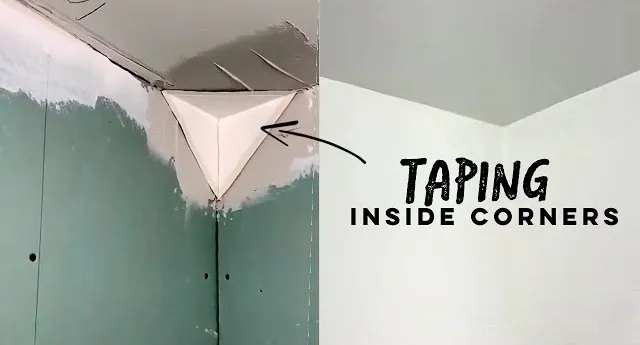
Drywall corners get bumped, so corner tape selection counts for both price and longevity. To plan, build a quick chart by room size (say 20 meters, 40 meters, 60 meters of corners) and multiply by materials and hourly labor to see the actual gap.
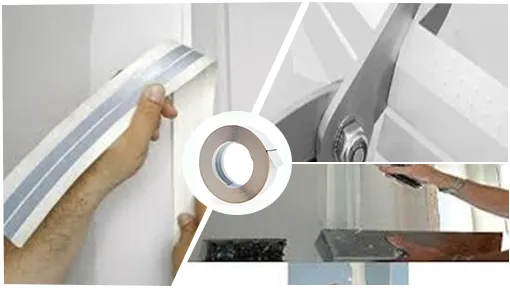
Metal corner tape is a hybrid: a paper face with thin metal strips embedded along the length. The paper
adheres to mud, and the metal maintains a sharp, clean edge.
Its task is to fortify and shield exterior corners from carts, luggage, children’s playthings and everyday knocks. The metal core distributes impact and resists denting.
Compared with plain paper tape by itself, it is stiffer and more impact resistant. That rigidity holds lines honest over long distances. A lot of installers prefer it in both homes and commercial spaces (schools, clinics, offices) where traffic is heavy. Paper-faced metal beads provide a better finish at the wall angle because the paper transitions smoothly to mud.
There are caveats. Users report mudding issues with some metal beads, such as compound that cracks, shrinks strangely, or cures slowly if applied too thick. There are bullnose (rounded) metal options, but they’re rarer and typically used for certain design aesthetics. Selection usually boils down to personal preference and project requirements.
Of course, we all know that paper corner tape is applied on the external drywall corners, adding protection with a cleaner profile and lower cost. It appears on inside corners of rooms where a few individuals opt for a paper Corner tape for a snug, flexible fit.
It’s perfect for hallways, staircases, and children’s bedrooms, or any space that runs the risk of being banged up. For repairs, paper tape patches up busted corners without adding metallic bulk, which is useful when feathering in with aged walls.
Installers like that paper can be nudged while wet. It shifts a little, allows you to re-set the line, and then locks in as the compound dries. Over time, though, paper corners can get dinged. Twenty years later, examples field test the frayed edges and touch-up wear.
Where metal outperforms includes long, exposed corridors, rental units with heavy turnover, hospitals and schools, corners that take rolling loads, corners needing a razor-straight edge, and spots where a paper-faced metal bead avoids repeated repairs. Other types exist too: paper-faced metal Corner tapes, full paper Corner tapes, and bullnose beads for rounded edges.
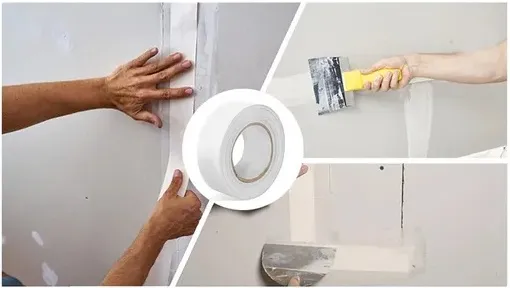
Knowing which tape to use. Consider the site conditions, the talent at hand, and the finish you require. Consider security for the package, tape width ranging from 25 to 75 mm, length between 45 and 550 m, and adhesive type.
Paper tape takes care of the majority of flat seams and inside corners. Its tensile strength is sufficient once set in joint compound, and the paper fiber adheres nicely to gypsum surfaces.
Metal corner tape provides metal reinforcement that resists dents, cart strikes, and edge deformation to exposed corners. It’s the safer choice for hallways, stairwells, and areas of high traffic. Don’t use paper tape on outside corners, soffit edges, or anywhere that receives impact because it can crush or fray. For shipping, elevated security demands reinforced paper or water-activated kraft with a powerful starch-based adhesive, not lightweight paper tape.
Paper tape warps with these slight curves, misframed and crooked inside corners. It sits flush on uneven surfaces and intricate contours.
Metal corner tape is more rigid. It keeps edges straight and crisp over long runs. Bend it around tight bends and the metal can kink or crack, which telegraphs through the finish. Apply paper tape for curves, niches, and sharp angles. Save the metal for real, straight corners where shape and resistance to impact is important.
Paper tape: 1) Load a 100 to 150 mm knife with joint compound. 2) Bed the tape, crease for corners, press out air. 3) Top with a thin layer. 4) Allow to dry, then apply two broader coats. It depends on compound alone. For packaging, water-activated paper tapes utilize a starch-based adhesive that you apply with a dispenser to ensure even wetting.
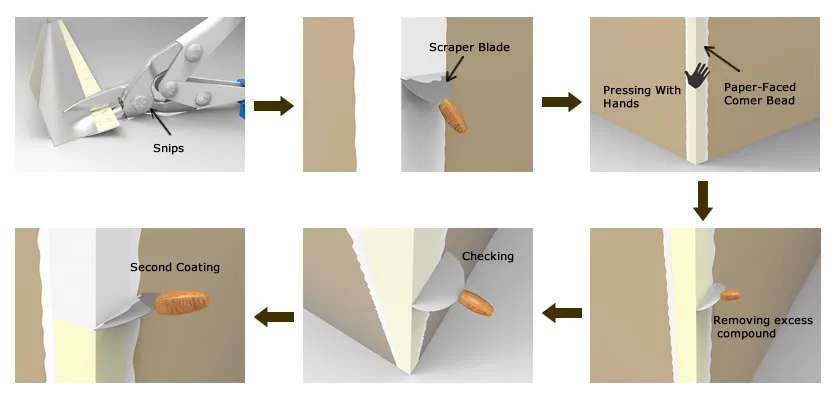
Metal corner tape: 1) Snap a straight line. 2) Compound on both sides. 3) Place the tape flush with the edge. 4) Cut both flanges; some pros staple on hurting substrates. 5) Apply two to three skim coats to bury the metal.
Check alignment early. If the corners get misaligned, they will crack or shadow. Taping by hand works for small projects. For bulk, employ corner tools or tapers.
Paper tape finishes flatter, so seams disappear under skim coats and paint beautifully with little telegraphing. Metal corner tape frequently requires additional compound to hide its edges and blend to the field. Feather 200 to 300 mm past the joint, sand with 180 to 220 grit, back-roll primer for uniform sheen. For shipping, select printable kraft for branding, recyclable paper for sustainability, or “fragile” prints for handling cues. Paper and kraft materials boost eco profile and are often recyclable.
Consider space utilization, level of expertise, and time. Small bath redo needs light gear. A bustling hallway or school wall requires hard edges. Try it out on a scrap board first. Check for straight lines, bubbles, and cracks, which is also known as paper tape.
Select your tape, blend your mud, and establish your initial corner today.

Connect with an NQ expert to discuss your product needs and get started on your project.
Contact NowWhat is Corner tape in drywall?
Corner tape is the protective strip on outside drywall corners. It makes a straight, strong edge. You put compound over it, sand, and paint. It keeps chips and dents from forming, and puts down those crisp lines.
How does metal Corner tape compare to paper-faced Corner tape?
Metal is resilient and impact proof. Paper tape, paper-faced metal, makes mud stick easier and crack less along edges. Plain paper tape isn’t Corner tape; it strengthens seams, not corners. Select based on traffic, degree of finish, and installer preference.
What are the pros and cons of paper-faced Corner tape?
Pros: Fast installation, strong bond with compound, clean edges, fewer cracks. Cons: Less impact resistance than solid metal, needs careful mudding to avoid edge build-up. Great for residential and fine finishes!
How do I decide between metal Corner tape and paper-faced bead?
Think traffic, budget and skill. Metal is preferred in high-traffic locations for durability. For ease in finishing and rapidity, paper-faced bead shines. Try it out on a small piece to get a feel for your instruments and approach.
What do experienced artisans prefer for corners?
Many pros use paper-faced bead for speed and clean results and solid metal in high-abuse zones. They combine paper tape with every joint and inside corner. This combination strikes a balance between strength, finish quality, and speed.